
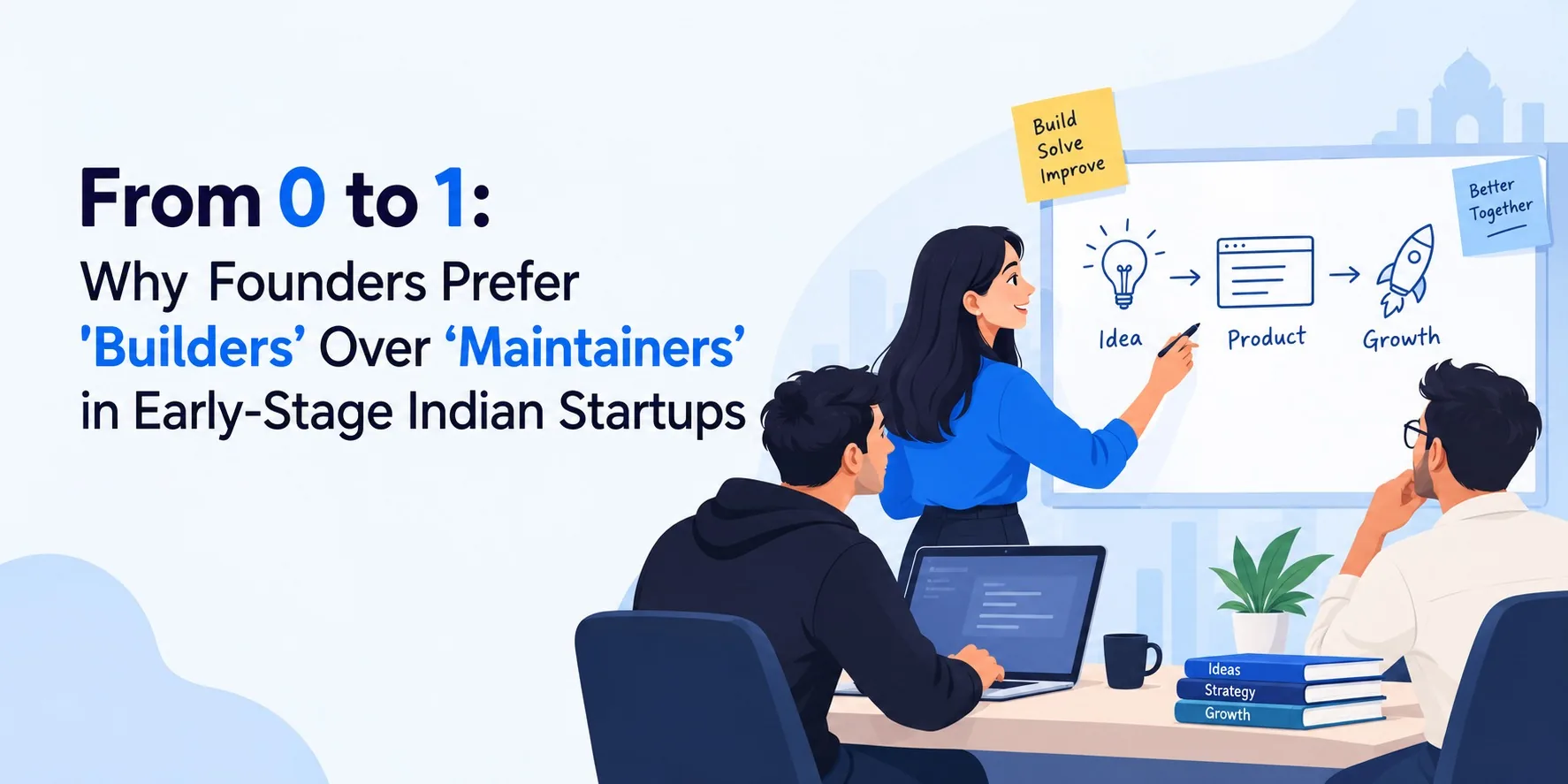
Starting a business from scratch is never easy. Founders have ideas, plans, and big goals, but turning those ideas into something people actually use takes the right team. In the early days, there may be no fixed processes, a small budget, and plenty of challenges to figure out.
That’s why many early-stage startups look for people who can build things from the ground up, take responsibility, and find solutions when something goes wrong. These people are often called builders. Maintainers, on the other hand, focus on keeping existing systems running smoothly.
Both are important, but when a startup is just getting started, builders can make a real difference.
1. Builders Turn Ideas Into Something Real
Every startup starts with an idea. But having a good idea and building a product that people actually want are two very different things.
This is where builders come in. They don’t just talk about what could be done; they take steps to make it happen. They create the first version of a product, test new ideas, learn from mistakes, and improve things along the way.
For example, imagine an Indian startup building an AI-powered hiring platform. At the beginning, the founders might not know which features recruiters will find most useful. Instead of spending months trying to make everything perfect, a builder helps create a basic version, gets feedback from recruiters, and works on improvements.
This approach helps the startup understand what customers really need before investing too much time and money.
It also reflects an important lesson from entrepreneurship: a product becomes more valuable when teams test their assumptions and learn from real customers.
For founders working with limited resources, having people who can turn an idea into a working solution is a huge advantage
2. Builders Take Ownership Instead of Waiting for Instructions
In a large company, employees usually have clearly defined roles and processes to follow. In a startup, things are often less organised, especially during the early stages.
One day, a developer might be fixing a product issue. The next day, they might need to work with the designer or marketing team to solve a completely different problem.
Builders are comfortable with this kind of environment. They don’t wait for someone to explain every small step. They try to understand the problem, suggest solutions, and take responsibility for their work.
For instance, imagine a startup launching its first website. A developer could finish the assigned coding work and consider the job done. But someone with a builder mindset might also check whether the website works properly on mobile, whether users can sign up easily, and whether the overall experience makes sense.
This doesn’t mean employees should work without guidance or handle everything alone. It simply means they care about the final result, not just the task assigned to them.
For founders, this kind of ownership makes teamwork easier and helps the business move forward without unnecessary delays.
3. Builders Can Adapt When Things Don't Go as Planned
One thing every founder learns quickly is that a startup rarely follows the original plan exactly.
Customers may ask for different features. A product may not get the response the team expected. Sometimes, an idea that looked promising at first simply doesn’t work.
In these situations, a startup needs people who are willing to learn, adjust, and try a different approach.
Builders don't treat every setback as a failure. They look at what went wrong, understand why it happened, and figure out what can be done better next time.
For example, an Indian software startup might initially develop a product for small businesses but later discover that larger companies are more interested in it. The team may need to change its approach, improve certain features, or rethink its pricing.
A builder is willing to explore these changes instead of sticking to the original plan just because that was the first idea.
Of course, adapting doesn't mean changing direction every time something goes wrong. Decisions should still be based on customer feedback, business goals, and what the team has learned.
For early-stage founders, having people who can handle uncertainty without losing focus can make the journey much easier.
4. Builders Help Startups Grow Beyond Day-to-Day Tasks
In the early days, getting work done quickly matters. But as a startup grows, the way that work gets done becomes just as important.
Consider a simple example. If a team keeps facing the same technical problem, it can fix the issue every time it appears. That might solve the immediate problem, but it doesn't prevent it from happening again.
A builder looks for the reason behind the problem and tries to find a lasting solution.
The same thinking applies to other roles. A marketer might publish posts regularly, while a builder studies which posts attract the right audience. A designer might create individual screens, while a builder thinks about how the complete product experience can be improved.
These small improvements can save time, reduce repeated work, and help the company become more efficient.
However, this doesn't mean maintainers are less valuable. Once a startup starts growing, it needs people who can keep systems reliable, manage day-to-day operations, maintain security, and ensure consistent quality.
The best teams need both. Builders help create and improve things, while maintainers help keep them working well.
The real challenge for founders is knowing what their business needs at each stage and hiring people who can meet those needs.