
1. Introduction: The 2026 AI Job Market Reality
Finding entry-level AI work in India feels impossible right now. You're a recent engineering graduate or someone who taught yourself to code, and the standard application process is completely broken. People spend hours adjusting their resumes and apply to hundreds of roles on old job boards, only to hear absolutely nothing back. Your application disappears into a massive stack.
Hiring expectations changed fast this year. Tech companies stopped caring about freshers who only know basic Python or can recite textbook machine learning concepts. They want people who build things. Teams need problem solvers who can actually push AI features into live products that real customers use every single day.
We looked closely at thousands of hiring conversations between major Indian tech firms and junior developers at Hirance. The pattern is obvious. Recruiters hire candidates who bring specific applied abilities to the table instead of impressive university names. These same candidates also rely on modern platforms that let them skip the traditional application black hole entirely.
We'll walk through the exact five AI skills that catch a recruiter's attention in 2026. You'll also see practical ways to prove you have these abilities without needing years of corporate experience.
2. Why the Traditional "Resume Pile" is Failing You (And What Recruiters Actually Want)
Before we dive into the skills, we need to address the elephant in the room: why your current strategy isn't working before discussing specific skills.
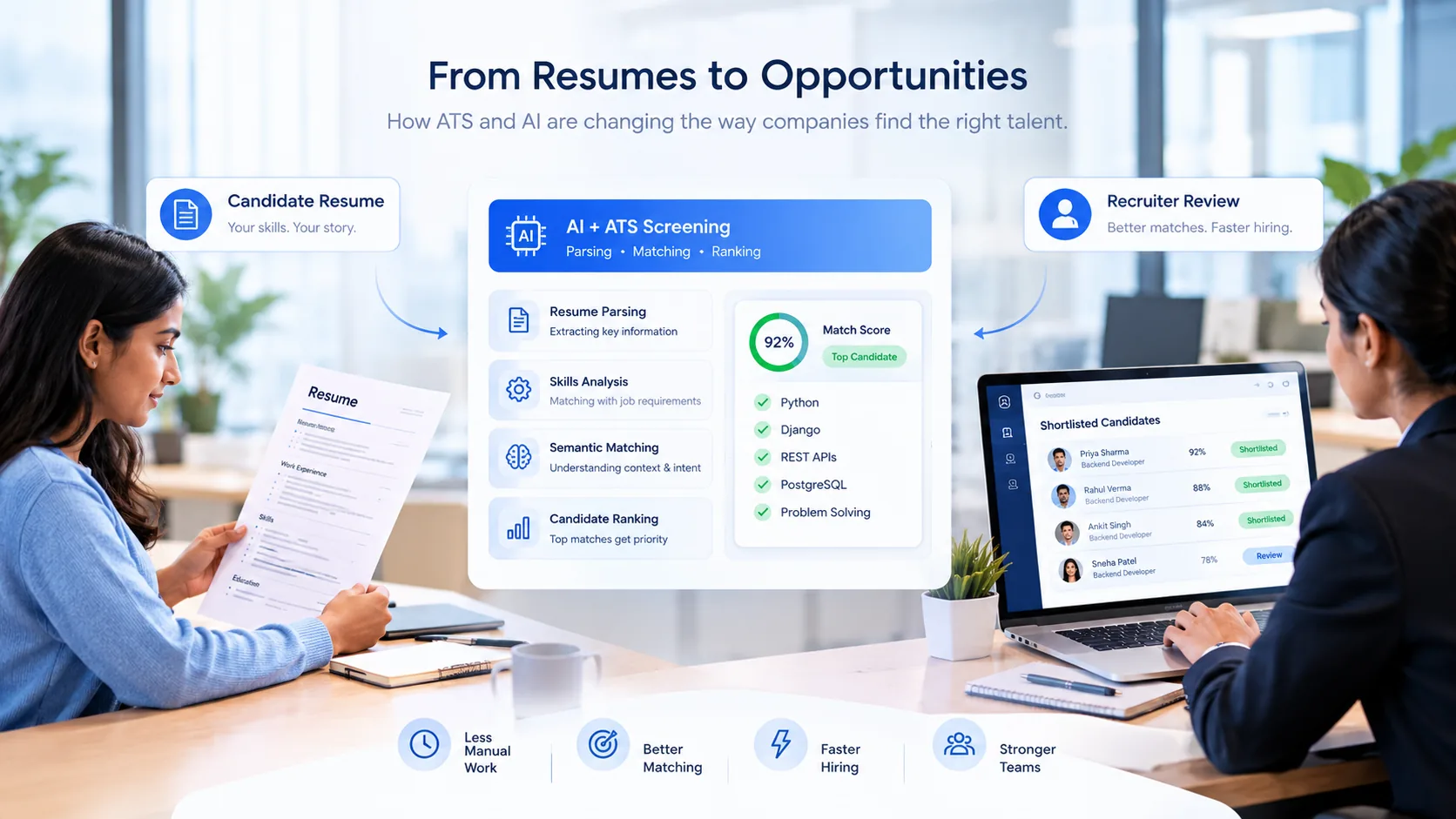
We've worked with fast-growing startups and enterprise tech teams across Bengaluru, Gurugram, and Hyderabad, so we know what actually happens behind the scenes. A single AI Engineer posting now attracts eight hundred to a thousand applications. Recruiters spend roughly six seconds scanning each resume. You get filtered out by outdated tracking systems if they don't spot immediate proof of capability right away.
The Expertise Gap
Most new grads still treat AI like a textbook subject. Your resume probably lists Machine Learning, Data Structures, and Python. Those are basics now. Every computer science graduate has the exact same three lines at the top of their application. Recruiters are tired of reading them. They don't want to hire someone and spend six months teaching them how modern AI applications actually work. Hiring managers look for people who already know the current stack and can write useful code during their first week. Getting past that initial screening means you have to stop studying theory and start building real things. Focus on projects that fix actual business problems. When your profile highlights practical work instead of coursework, you immediately stand out from thousands of identical applications.
3. The 5 AI Skills That Actually Get You Hired as a Fresher in 2026
Hiring managers are looking for specific abilities right now. Here are five skills you'll want to add to your resume this year.
1. Applied Prompt Engineering & Context Design Typing a question into a chatbot is easy. Getting an LLM to spit out perfectly formatted JSON for your backend takes real work. By 2026, prompt engineering has turned into a standard software skill you actually need on your resume. Start by learning few-shot prompting, chain-of-thought reasoning, and ways to handle hallucinations. Then build a project that pulls structured data out of messy PDFs using those exact techniques.
2. Building with RAG (Retrieval-Augmented Generation) RAG is the skill hiring managers actually look for in new AI grads right now. Businesses don't want generic chatbots. They need tools that read their private files and answer questions using that specific information. You'll want to get comfortable with vector databases like Pinecone, embedding models, and frameworks such as LangChain. Build a bot that answers questions about your college syllabus or startup legal documents. Host it live and share the link on your profile.
3. AI Agent Orchestration Simple chatbots are old news. In 2026, everyone's building AI agents that plan steps and use tools to finish hard jobs on their own. You'll want to study frameworks like AutoGen, CrewAI, or LangGraph. Learn how an LLM can browse the web, write code, or search a database without you clicking anything. Try building one that researches a tech topic, writes a summary, and emails it to you automatically.
4. Basic MLOps and Model Deployment (FastAPI & Streamlit) A great AI model means nothing if it stays trapped in a Jupyter Notebook on your laptop. Companies hire freshers who can wrap models in an API so frontend teams actually use them. Pick up FastAPI for backend work, and Streamlit or Gradio for quick demos. Learn basic Docker and cloud hosting on AWS or HuggingFace Spaces. Skip the ten page GitHub README. Build a live, clickable web app instead because working software always speaks louder than documentation.
5. Domain-Specific AI Integration AI works best within specific industries. A new graduate who grasps FinTech fraud detection or HealthTech data summarization is far more valuable than a generic enthusiast. Pick one field you actually enjoy. Study its compliance rules like data privacy and build a tailored tool for that niche. You can prove your skills by writing a case study on your profile. Explain exactly how your creation solves a real problem in that sector to show employers your practical value.
4. How to Prove These Skills Without "Years of Experience"
Worried about lacking corporate experience? It's a common concern for freshers. You just need to shift your approach. In tech hiring today, your portfolio counts as real work history. Here is how beginners build genuine credibility with employers:
1. The "Proof of Work" Portfolio Your resume won't cut it anymore. Build a personal site or clean up your GitHub profile instead. Pin your three best projects. Add a live demo, the repo link, and a quick Loom video where you walk through your code. Hiring managers notice that immediately.
2. Open Source Contributions You don't need maintainer status to help. Search GitHub for AI startups with "good first issue" tags, then fix bugs or update docs. Recruiters trust candidates who've merged pull requests into recognized repositories because it proves real technical ability.
3. Document Your Learning in Public Post short updates on LinkedIn or Medium about your current work. After building a RAG pipeline, explain three specific errors and how you fixed them. This honest documentation shows real expertise because it proves you're learning through practical experience instead of just claiming knowledge.
4. Optimize for Skill-Based Matching When you apply for jobs, match your profile to their exact keywords. Don't write "Worked on a machine learning project." Write "Built a RAG customer support bot using LangChain and Pinecone that cut resolution time by 40%."
5. Navigating the AI Job Hunt and Interview Process in 2026
Good AI skills and a solid portfolio matter. You still need a sharp plan for finding jobs and interviewing well.
1. Target Specific AI Roles Don't limit yourself to crowded titles like Data Scientist. Look at LLM Application Engineer, AI Integration Developer, or Junior MLOps Engineer instead. Hiring managers for these jobs care about practical skills and real problem solving.
2. Prepare for Practical Assessments AI interviews now test practical skills beyond Python. You might build RAG pipelines or debug agents under pressure. It's smart to practice shipping small end-to-end applications quickly before your next technical screening.
3. Master Your Project Story Explain your design choices. Talk through the tech stack, latency issues, and how those decisions actually helped the business grow.
4. Show Continuous Learning AI moves fast. Share recent tools or papers you've explored to prove you're curious and keeping up with changes.
India's 2026 AI job market is tough. Degrees don't guarantee hiring anymore, so practical abilities like RAG, AI Agents, and MLOps matter most when backed by real projects that prove you can build things. Employers want visible proof of work and strong project stories. Pair those technical skills with a smart search strategy, and you'll stand out while landing the specific AI role you actually want.